What's the Best Exercise for Overall Strength? (Deadlift vs. Squat vs. Pull-Up)
Spotify | Apple | YouTube
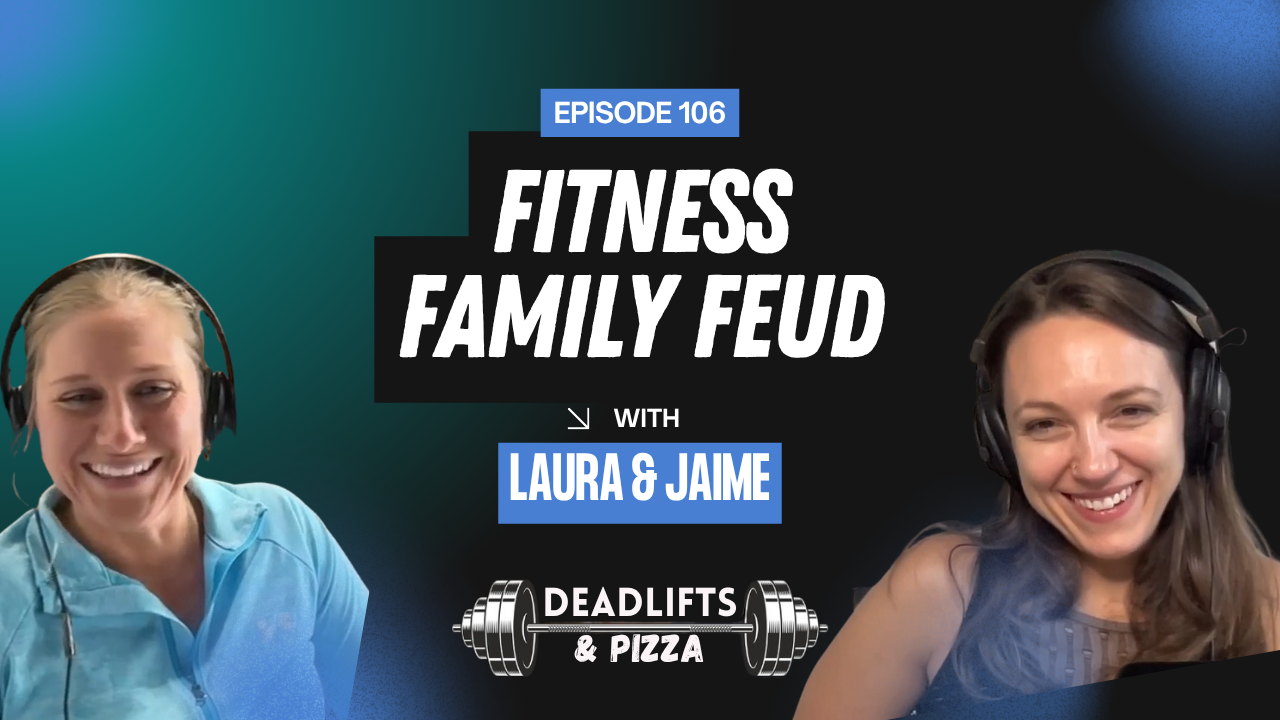
This week's episode was pure chaos in the best way. Jaime and I turned Deadlifts and Pizza into our own janky version of Family Feud, complete with rules we made up about five minutes before hitting record. She had ten questions ready for me split between nutrition and training, I had four for her, and it turns out, I’m not very good at this game. We had a couple disagreements the fairness of the questions and answers (We landed on "just trust the science," which is really just code for "we made it up.")
We covered a lot of ground. Foods people only eat for the protein, "healthy" snacks that are secretly calorie bombs, the muscle groups everyone conveniently skips, the most annoying things you see at the gym, what's actually in a lifter's gym bag, the most popular diets in the US, and the supplements Americans reach for most. It's a fun, fast one if you want something light for a drive or a lifting session.
One question turned into a genuine back and forth though, and I think it's worth pulling out and actually answering properly: what exercise proves you're strong?
What's the Best Exercise for Overall Strength?
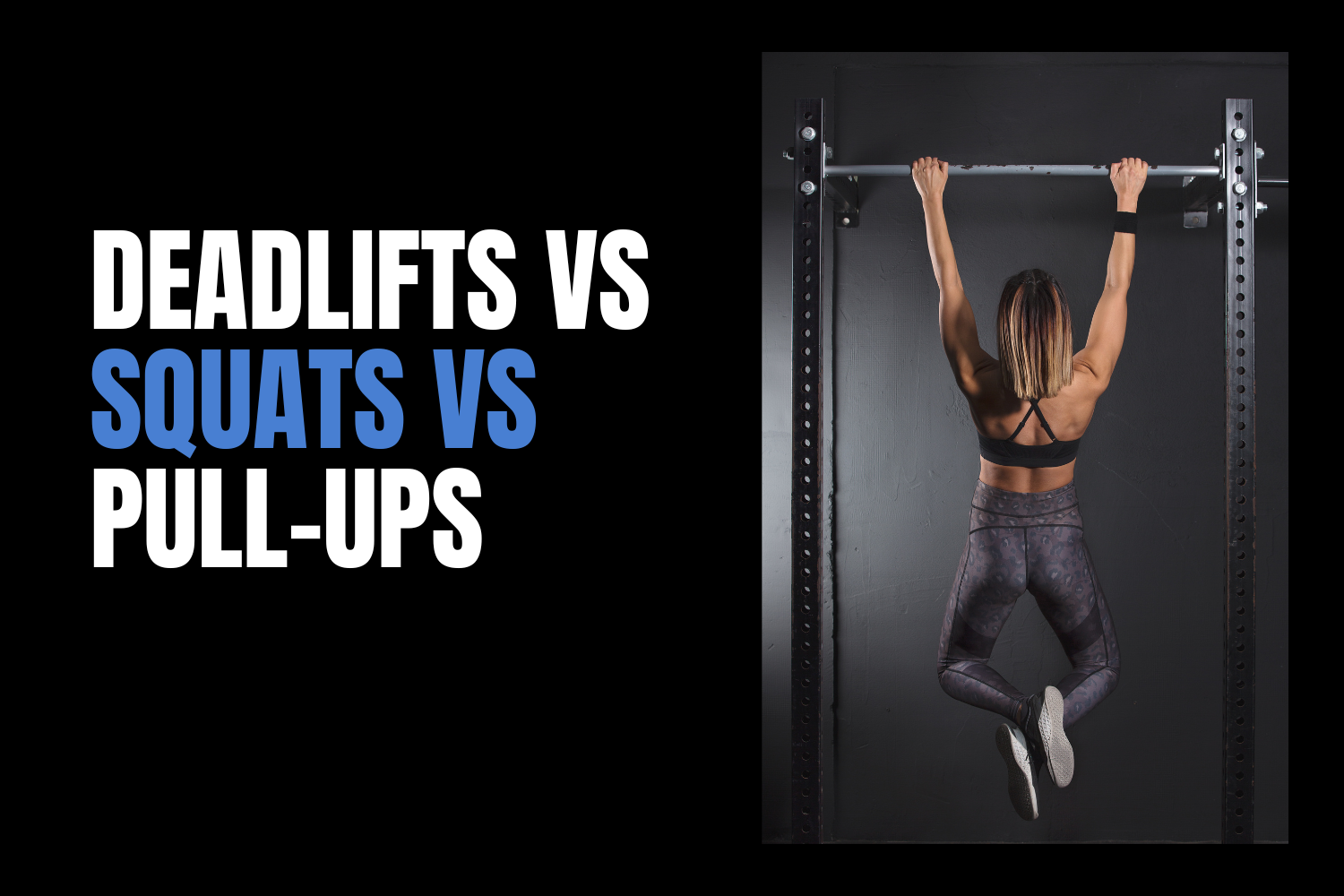
On the show, the survey list ranked the pull-up as the top answer, ahead of the squat, the deadlift, and the overhead press. Jaime's reasoning was that almost anyone can technically perform a deadlift, loaded or not, so the exercise alone doesn't prove anything. A pull-up, on the other hand, filters people out immediately. You either have the strength to move your own bodyweight or you don't.
Here's the thing. That's a great point, but it's answering a slightly different question than the one people usually mean when they ask this. The real answer depends on what kind of strength you're trying to measure.
What a Pull-Up Actually Proves
A pull-up is a strong test of relative strength, specifically your upper body. It tells you whether someone can control their own bodyweight, which is a real and useful marker for grip, back, and core strength. But relative strength has a ceiling. Once you can do one pull-up, you can do them, and the exercise stops telling you much about how strong you actually are beyond that point unless you start adding load.
What a Squat Actually Proves
The squat earns its spot on this list too, just for a different reason. It's one of the best measures of lower body strength specifically, and it lets you load up far beyond what a bodyweight movement ever could. If you want to know how strong someone's legs are, a heavy squat number will tell you.
Why the Deadlift Wins for Overall Strength (In My Opinion)
That's what separates the deadlift from both of them. It's not just a good exercise, it's one of the few movements that asks nearly every muscle in your body to work together at once, from your grip down through your hips. You're not only recruiting your upper body like a pull-up or lower body like a squat. Everything has to fire together, and the amount of weight you can move gives you a real number to measure your whole-body strength against.
That's the real difference between "proves you're strong" and "is associated with strength." A pull-up proves your upper body can move your own bodyweight. A squat proves your legs can move real load. A heavy deadlift tells you how strong you are as a whole, because there's no ceiling built into the movement the way there is with a bodyweight exercise, and no single body part carrying the load alone. If I had to pick one lift to gauge someone's overall strength, I'd still take a heavy deadlift over other exercises every time. It's the closest thing lifting has to an honest number.
If you've never actually tested where you stand on a real strength standard, that's usually more useful than guessing. It's one of the first things I build into any program I write, because you can't track progress against a number you've never established in the first place.
If you want a place to start building that strength, grab my free 6-week strength training program. It's built around the same compound lifts we talked about here, so you can start putting a real number behind your deadlift instead of just guessing.

Want a proven program to get started?
If you like structured training with clear progression (and no fluff), I put together a Free 6-week hypertrophy & strength program you can grab below.